


FLINC – Financing Large-scale Infrastructure – Case Nordic Connector
Financing large-scale cross-border infrastructure
BROAD SOCIETAL BENEFITS OF CROSS-BORDER INFRASTRUCTURE
The Kvarken Council has long advocated for a fixed link across the Kvarken Strait through the Nordic Connector initiative. The latest phase of this work is the FLINC project (Financing large-scale cross-border infrastructure – Case Nordic Connector). The primary objective of FLINC is to develop methodologies for:
- Financing large-scale cross-border infrastructure
- Assessing broader societal benefits
As the name suggests, the Nordic Connector serves as the primary case study. However, FLINC aims to establish frameworks applicable to other large-scale cross-border infrastructure investments as well.
WHY IS THIS PROJECT NECESSARY?
In sparsely populated regions, traditional cost-benefit analyses often fail to fully justify major infrastructure investments. There is a clear need for new methods to evaluate broader societal impacts and for viable models to finance this kind of cross-border projects.
FLINC builds upon and complements the feasibility study previously conducted by the Finnish Transport Infrastructure Agency regarding a fixed Kvarken link. By using the Nordic Connector as a case study for infrastructure in sparsely populated areas, the project aims to provide science-based evidence for future political decisions. Furthermore, it will gather valuable insights to benefit similar infrastructure projects in other border regions.

THE DIFFERENT WORK PACKAGES IN FLINC
1. Comparison and benchmarking
We compare the Kvarken link with successful European infrastructure projects, such as the Øresund Bridge and the Fehmarn Belt Fixed Link, along with similar Danish projects. We examine their financing structures and the key lessons learned.
2. Financial analysis
A comprehensive analysis is conducted to assess project viability, evaluating cash flows, risks, and various financing structures. This analysis demonstrates how the link can become feasible and attractive to both public and private stakeholders.
3. Broader societal benefits
We evaluate the potential positive impacts of a fixed link on the region across several key areas:
- Labor market: How a fixed link can facilitate labor mobility and the exchange of expertise.
- Innovation: The link’s potential to drive increased innovation and productivity.
- Business operations: How companies can expand their markets and establish new networks.
- National economy: The impact on the national economies of Sweden, Finland, and Norway.
- New investments: The project’s potential to attract sustainable investment.
- Resilience: Impacts on military mobility and security of supply.
4. Conclusions and dissemination
We facilitate dialogue with public and private stakeholders and synthesize our findings to assess the financing prospects for the Nordic Connector. Additionally, we will present a methodology for financing and evaluating future large-scale infrastructure, providing a roadmap for other border regions.
FLINC – NORDIC CONNECTOR AS A CASE STUDY
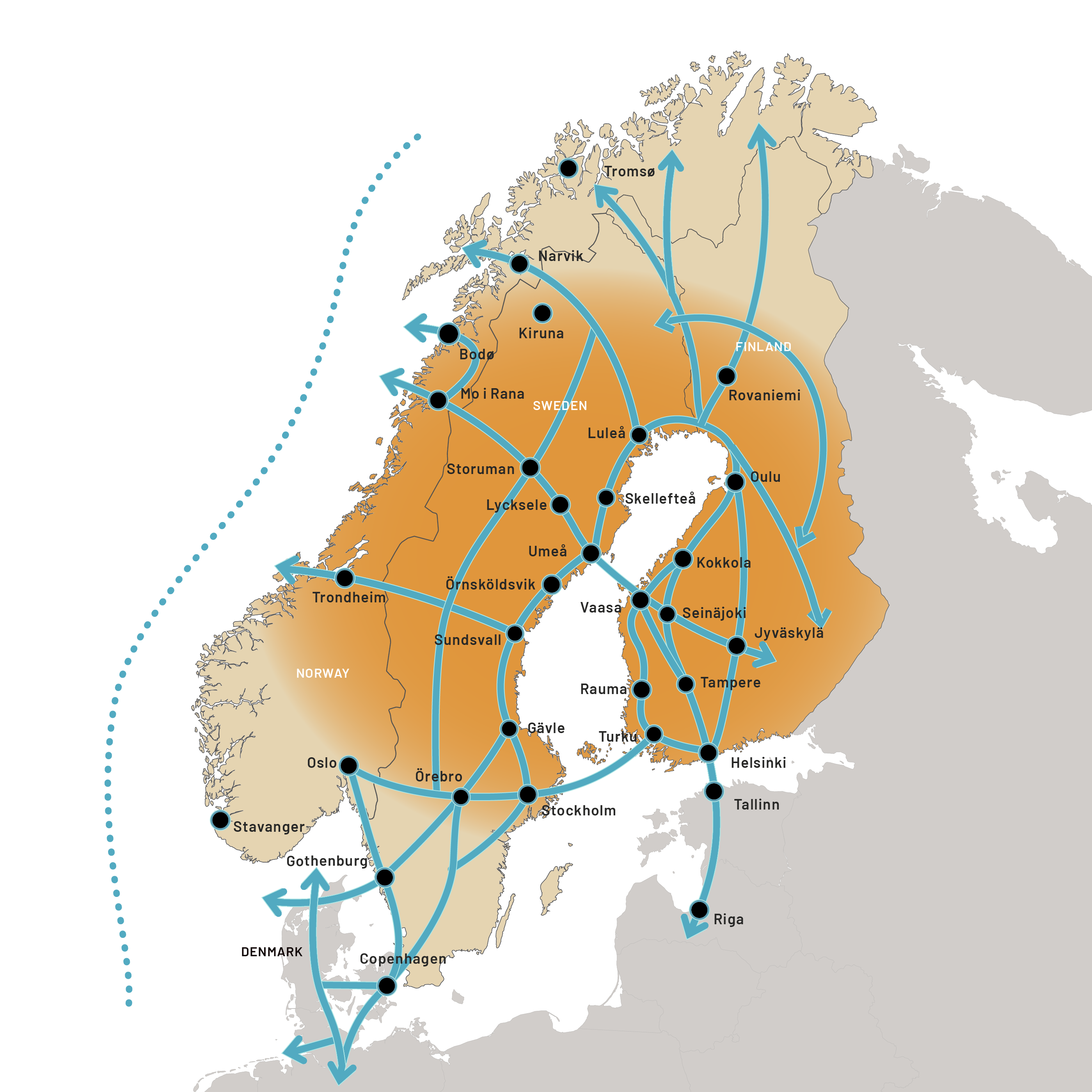
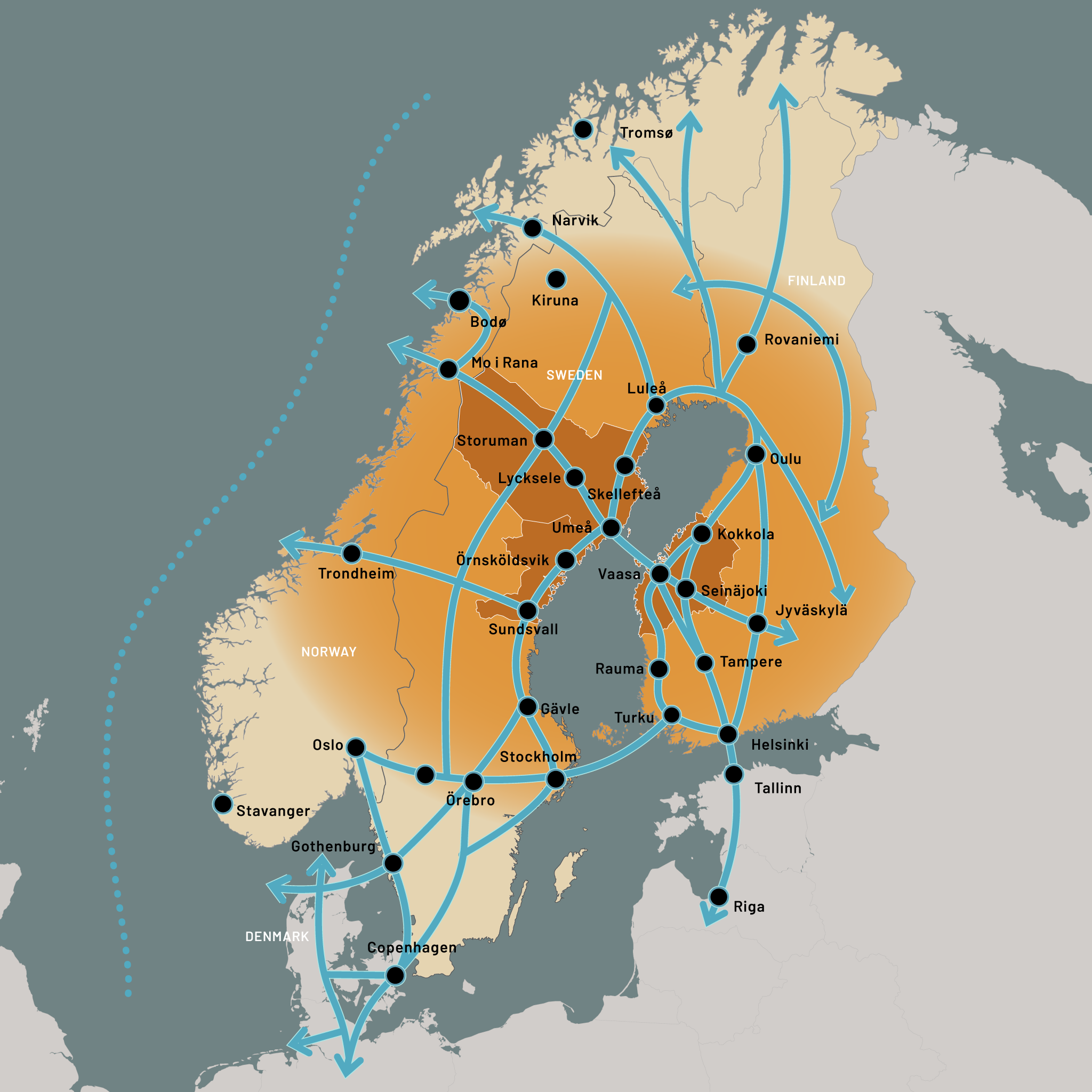
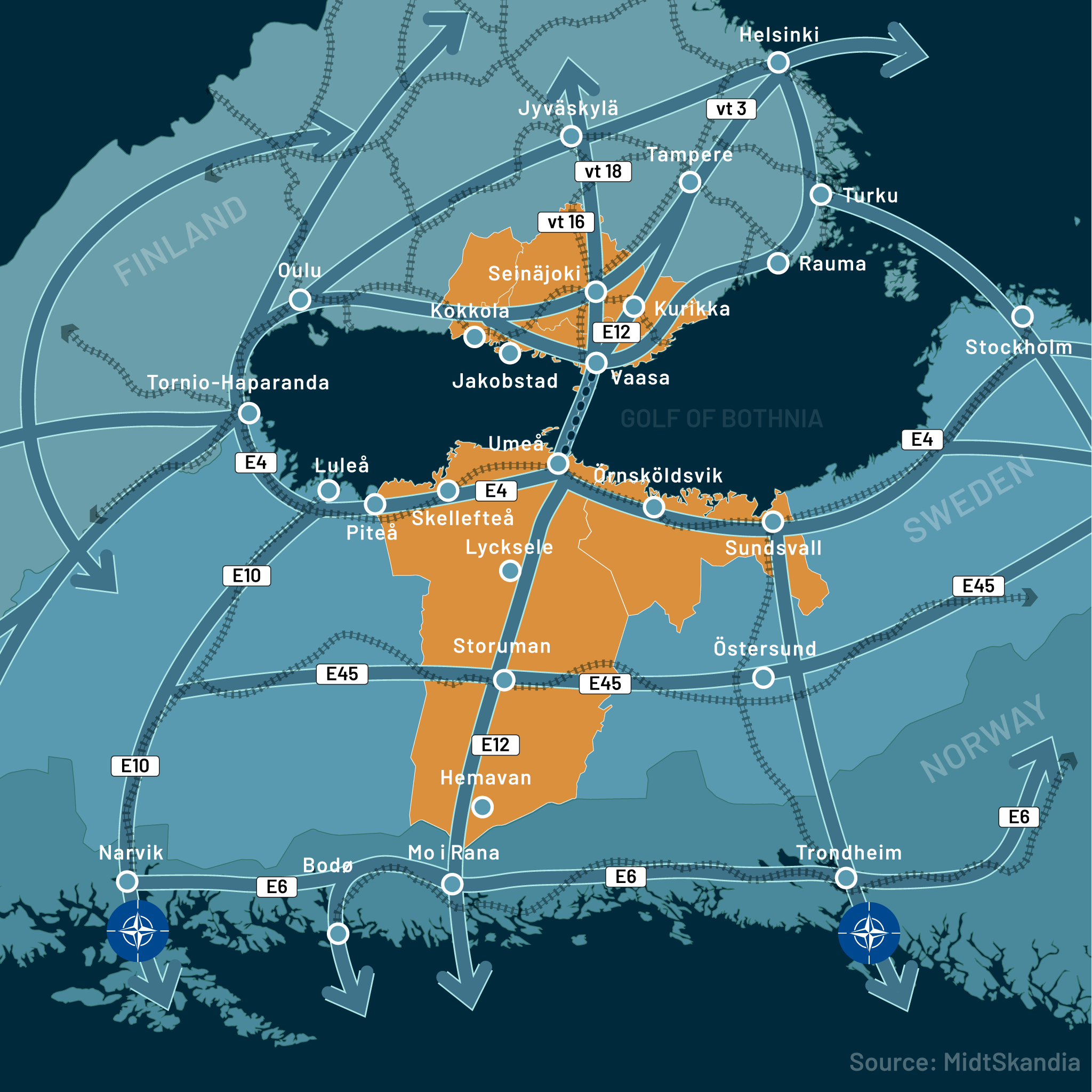
FLINC is an Interreg Aurora project where the Nordic Connector serves as the central case study. The Nordic Connector initiative explores the feasibility of a fixed link across the Kvarken Strait as part of developing east-west transport solutions in the northern Nordic region.
FLINC develops methods for the financing and analysis of broader societal benefits associated with large-scale, cross-border infrastructure. While the Nordic Connector is the concrete example, FLINC’s methodologies for financing and impact analysis are designed for broader application.
Within this initiative, the physical construction is not an end in itself; rather, the focus is on the societal benefits a fixed link enables. This is why the term “Nordic Connector” is used preferentially over “fixed link across the Kvarken
Project materials


Related reports
The FLINC project
Studies and reports related to the topic
Assignments within the FLINC project
Studies carried out by others
Private initiatives and information about them
Unfortunately, there is no access to these, as they are confidential.

Key facts
Contact information
Project budget: €599,600
Project partners: Kvarken Council EGTC (sole beneficiary)
Reference group: Includes representatives from the Finnish Transport Infrastructure Agency, Traficom, and the Swedish Transport Administration.
Funders: Interreg Aurora, Regional Council of Lapland (national co-financing), Finnish Transport Infrastructure Agency, City of Vaasa, Umeå Municipality.
Project duration: April 1, 2025 – December 31, 2026

Project owner and steering committee chair
Mathias Lindström mathias.lindstrom@kvarken.org
+358 50 918 6462
Communications manager
Johanna Häggman johanna.haggman@kvarken.org
+358 50 309 2960
FLINC’s contribution to the Sustainable Development Goals
FLINC contributes to Goals 9, 17 and 8 by developing methods for sustainable infrastructure, strengthening international partnerships and promoting employment and growth in sparsely populated regions.

Goal 9: Industry, Innovation and Infrastructure (main goal)
FLINC develops new methods for financing and assessing large-scale cross-border infrastructure. The project strengthens cooperation between actors, lays the foundation for sustainable transport connections in the northern Nordics and creates models that can also be applied in other sparsely populated regions.
Goal 17: Partnerships for the Goals (complementary goal)
FLINC builds on close cross-border cooperation between Finland and Sweden and develops methods that can benefit other regions in Europe and globally. By bringing together public authorities, businesses, researchers and political actors, the project fosters partnerships that enhance the capacity to plan and finance major infrastructure investments.
Goal 8: Decent Work and Economic Growth (complementary goal)
By analysing labour market development, accessibility and innovation-driven effects, FLINC shows how better infrastructure can contribute to more jobs, stronger competitiveness and sustainable economic growth in sparsely populated regions.